
Looks like you're visiting from Australia

When rural contractor Darryn Fairhall decided to branch out into gold mining, he chose a Kobelco SK300LC, renowned for its power and efficiency, to tackle the heavy lifting.
Darryn, of Fairhall Agricultural Services, has been in the rural contracting business for 34 years, undertaking a range of work from lifestyle to farm contracting and general contracting. For the first two or three years after setting up his business, it was just him, some second-hand gear he got from his dad, and a few implements he built in his shed.
One of the implements he built from scratch was a leveling bar, which he used when he won a contract with Landcorp to level a few paddocks for one of their new dairy units. Impressed with his work, Landcorp offered him more contracts, and Darryn recalls, “Next thing I knew, I had eight to ten staff and eight to ten tractors.”
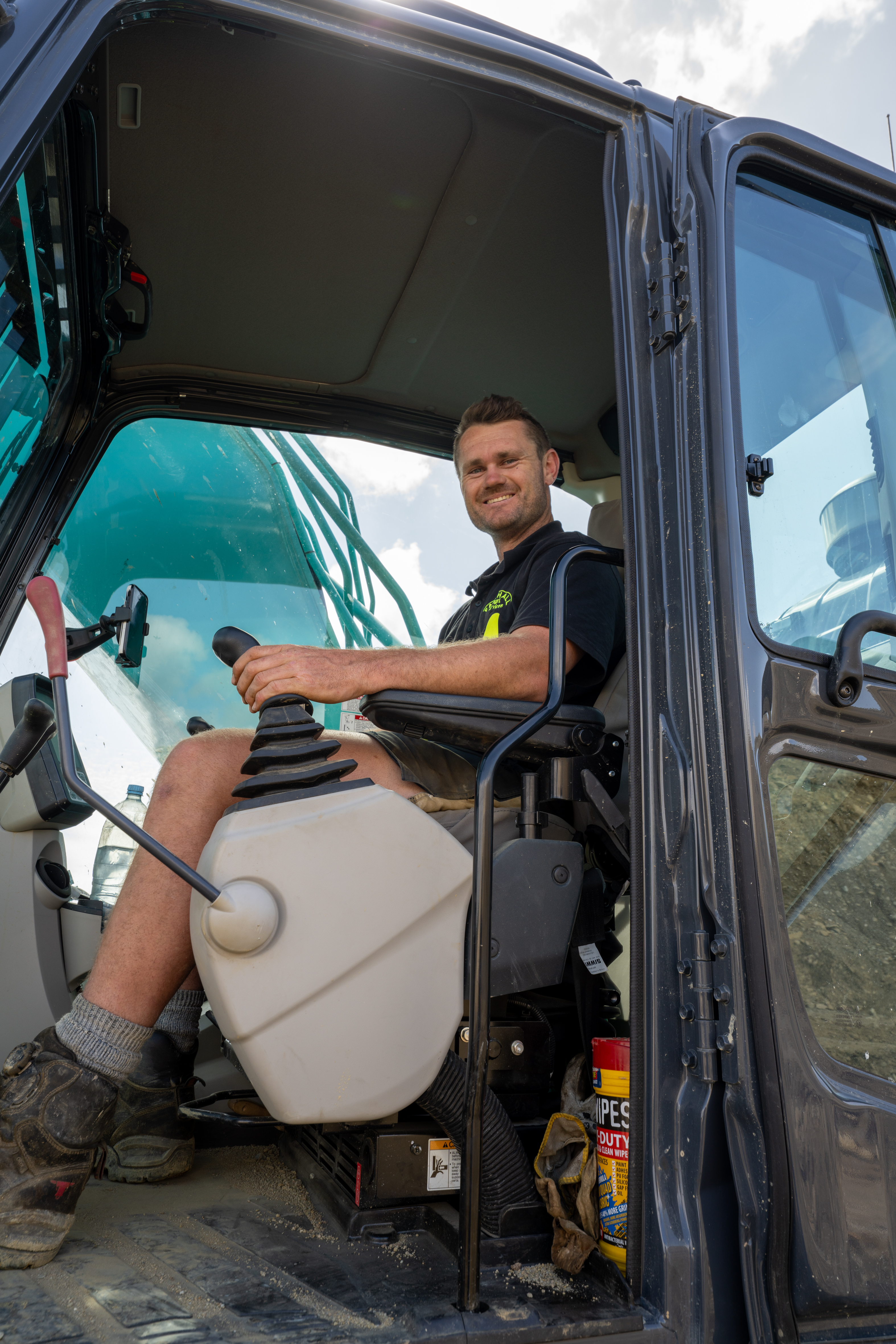
These days, Fairhall Agri has a core team of three, including Darryn’s eldest son, Cody, who joined six years ago after completing a Bachelor of Agriculture at Lincoln University. The team specialises in farm recontouring and grassing, mine site restoration, flood repair work, and forestry roading.
However, the cyclical nature of the yearly contracting cycle—with its frantic pace during the busy season and the eerie quiet of the off-season—led Darryn to look for a way to balance the workload throughout the year. “Finding work during the quieter times not only ensures we have a steady income every month, but it also means we can retain staff year-round.
“From my late teens, I went gold mining with my dad for about six years. My work mainly involved stripping overburden and reinstating mined ground to grass. I realised that mining fits well with my business model. We can focus on contracting work when the weather is good and, when the season ends, the same team and machines can transition to gold mining.
“With the gold price currently strong, I decided to take the leap.”
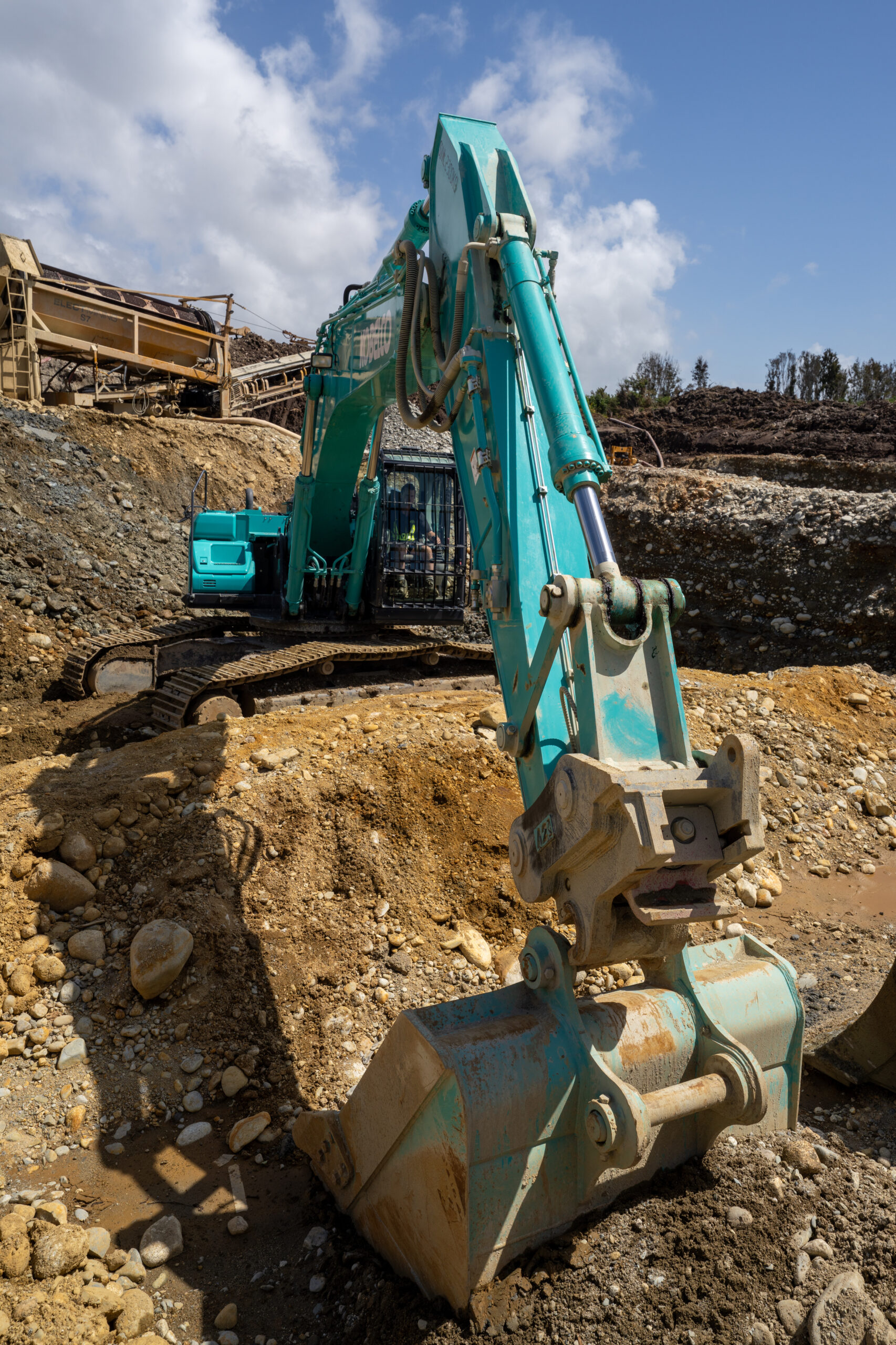
To this end, Darryn secured an access agreement to a block owned by Ngāi Tahu Forestry in Greymouth. The trees on the land have been harvested, and Darryn’s mining efforts will ensure that the stumps and forestry slash left behind are buried. Additionally, the gravels in the soil will be mixed thoroughly, improving the land for the next batch of trees to be planted once mining is complete.
Darryn also purchased a mining screen—a five-foot rotary gold plant—from the previous miner. This equipment “separates the fines from the big stuff,” enabling the extraction of gold.
An essential part of the operation is the excavator that handles the digging.
“We’re currently working dry. We dig a hole around 20 by 30 metres, going down to the clean papa bottom—a very hard blue clay. This layer can vary from six to ten metres deep, depending on the soil and gravel composition. The base isn’t smooth; crevasses often contain gold and need to be dug out.
“We process the excavated material through the gold screen as we go. Once one mining is completed, we back the screen up to the edge and start digging the next hole, with the tailings from the new hole filling the previous one.”
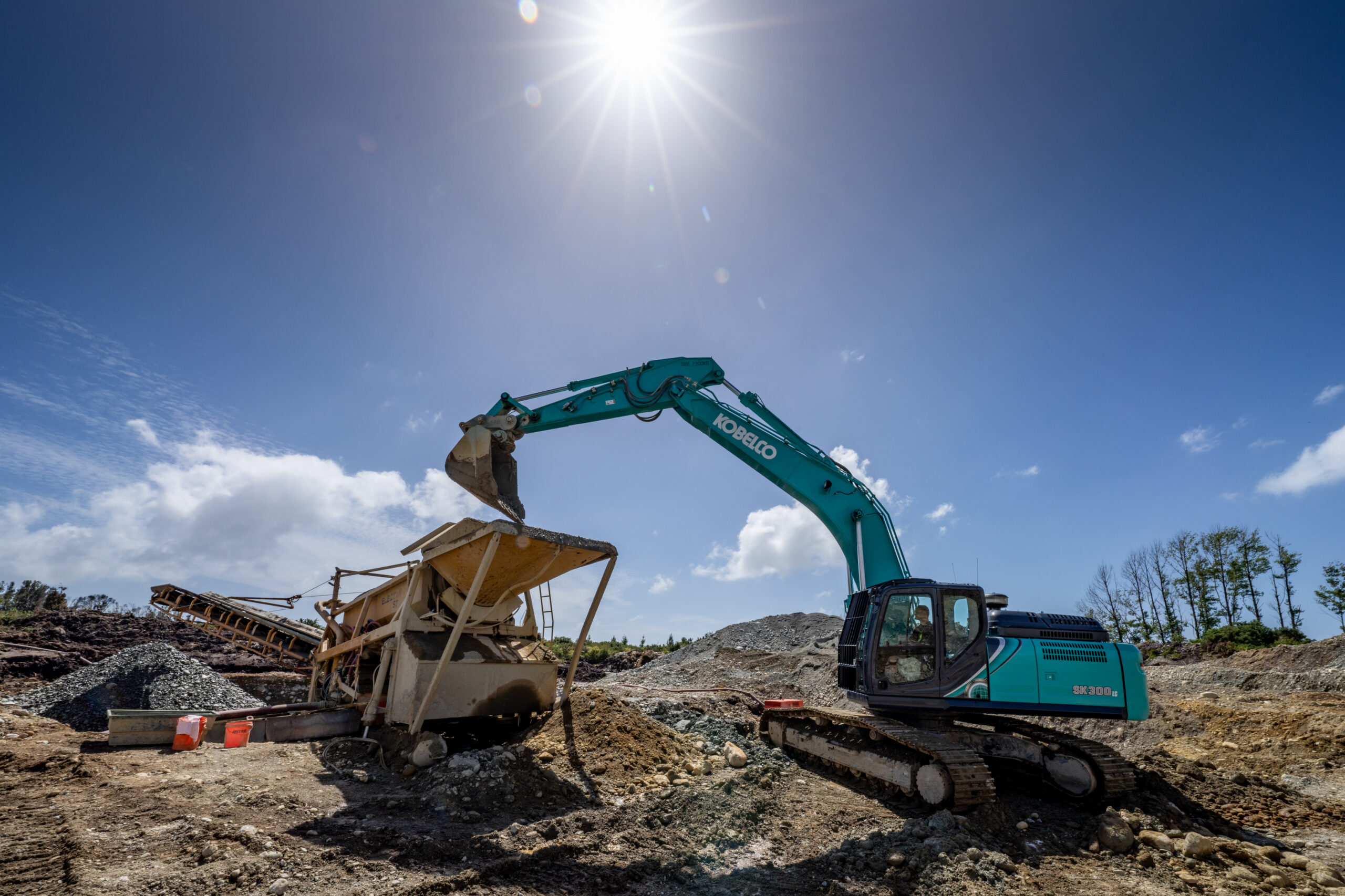
Fairhall Agri’s 25-tonne excavator wasn’t quite up to the job. “I needed a larger machine with fewer hours on it to handle the hard work efficiently.”
While the 25-tonne excavator now feeds the screen, Darryn purchased a brand-new powerhouse for the heavy lifting.
“I looked at machinery that could handle the task and fit my budget, and I chose a Kobelco SK300LC.”
The 31-tonne excavator is known for being tough and reliable, offering excellent digging force while ensuring operator comfort. Its efficient hydraulic system minimises fuel consumption while maximising power.
“I operated Kobelcos back when I was mining with my dad, and they were impressive even then. Since that time, they’ve only improved in power and fuel economy.
“Now that we’ve got it, I can confidently say it’s the smoothest machine we’ve ever had.
“And I have to give Kobelco full marks for service—when the machine arrived in Greymouth, their team flew in from Auckland for a full handover.”
When we spoke to Darryn, he had only been mining for three and a half months, and the new Kobelco was just getting into its stride.
“Contracting work is still the priority at the moment, but once we move to full-time mining, I expect the Kobelco to work from 6 a.m. to 5 p.m., five days a week. If we can average 50 hours a week, that would be ideal.”