Looks like you're visiting from Australia

For a town with a population of some 600 people, the small town of Wyndham certainly punches above its weight when it comes to services to Southland’s rural sector.
A quick glance around the outskirts of Wyndham will unearth numerous agricultural businesses, one of which includes Three Rivers Contracting. Overseen by company directors Jeff Robinson, Johnny McEwan and their spouses, the business was established in 2018 primarily to service the agricultural machinery needs of the regional farms with baleage, harvesting, drilling and cultivation being some of the key work.
However, as we soon find out, the company has steadily expanded its offerings to include earthmoving, products from its own quarries and contract crushing services, which is why we’ve taken the trip south – well sort of, but more on that shortly.
To undertake the work, a huge array of quality machinery sits on the company’s asset register, from truck and trailers, excavators, and of course tractors, harvesters, along with the attachments needed to efficiently carry out a wide variety of projects. The current winter workforce at our time of visit is 25 staff but balloons out to around 35 when the harvesting season kicks into gear.
Our road trip to see the machine we’re focused on takes us an hour further east from Three Rivers Wyndham base – just 10 minutes from Invercargill at one point – to our pin dropped destination at Riverton. If we chose to drive on a little bit further, we’d be at the base of Fiordland National Park.
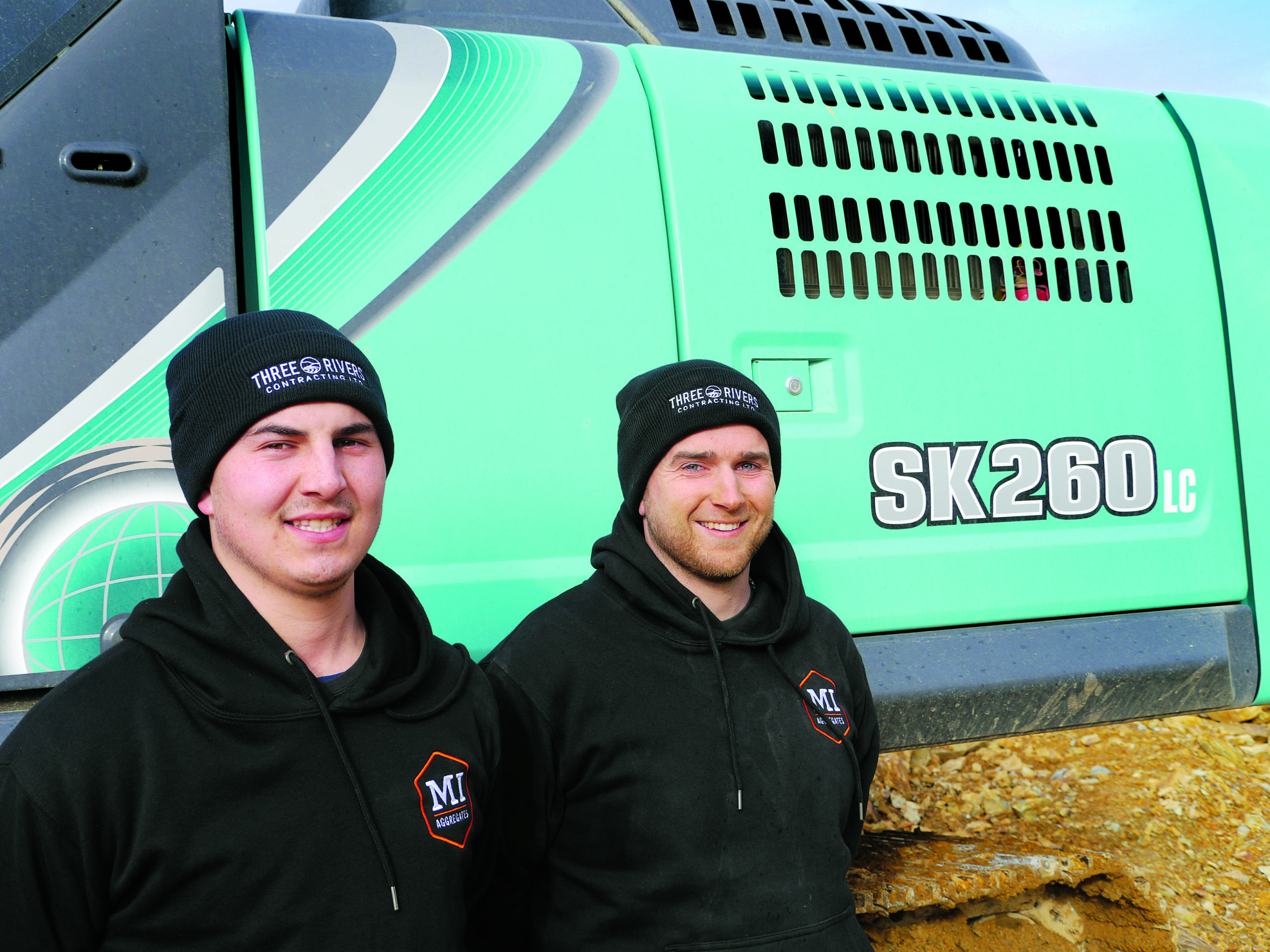
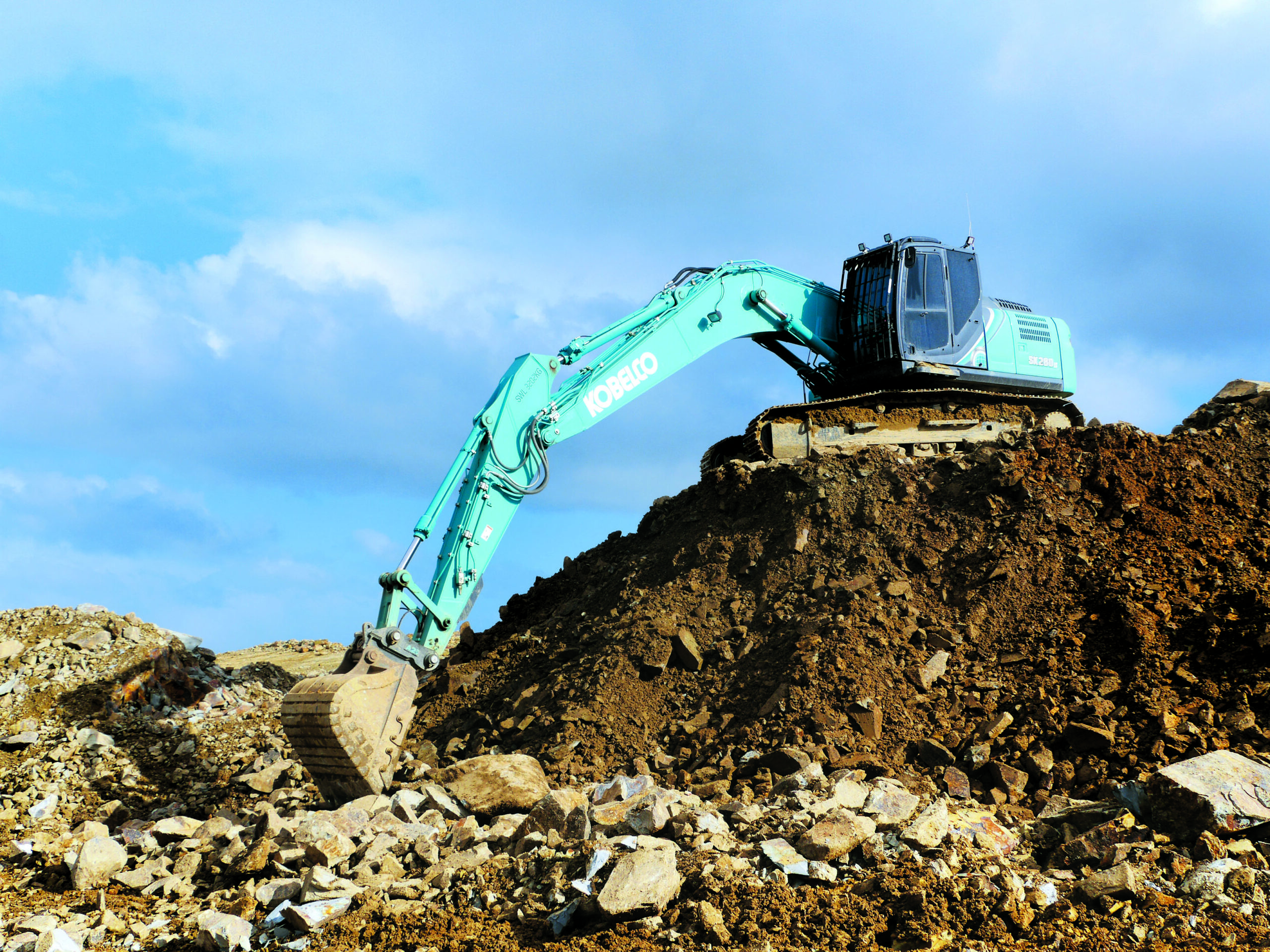
Geography lessons aside, the real reason we’ve travelled to this southern part of the country is to take a closer look at Three River’s Kobelco SK260LC-10 excavator. Recently put to work by Three River’s quarrying arm, MI Aggregates, the 25.7-tonne machine has been putting in long hours loading an impact crusher on a contract crushing project.
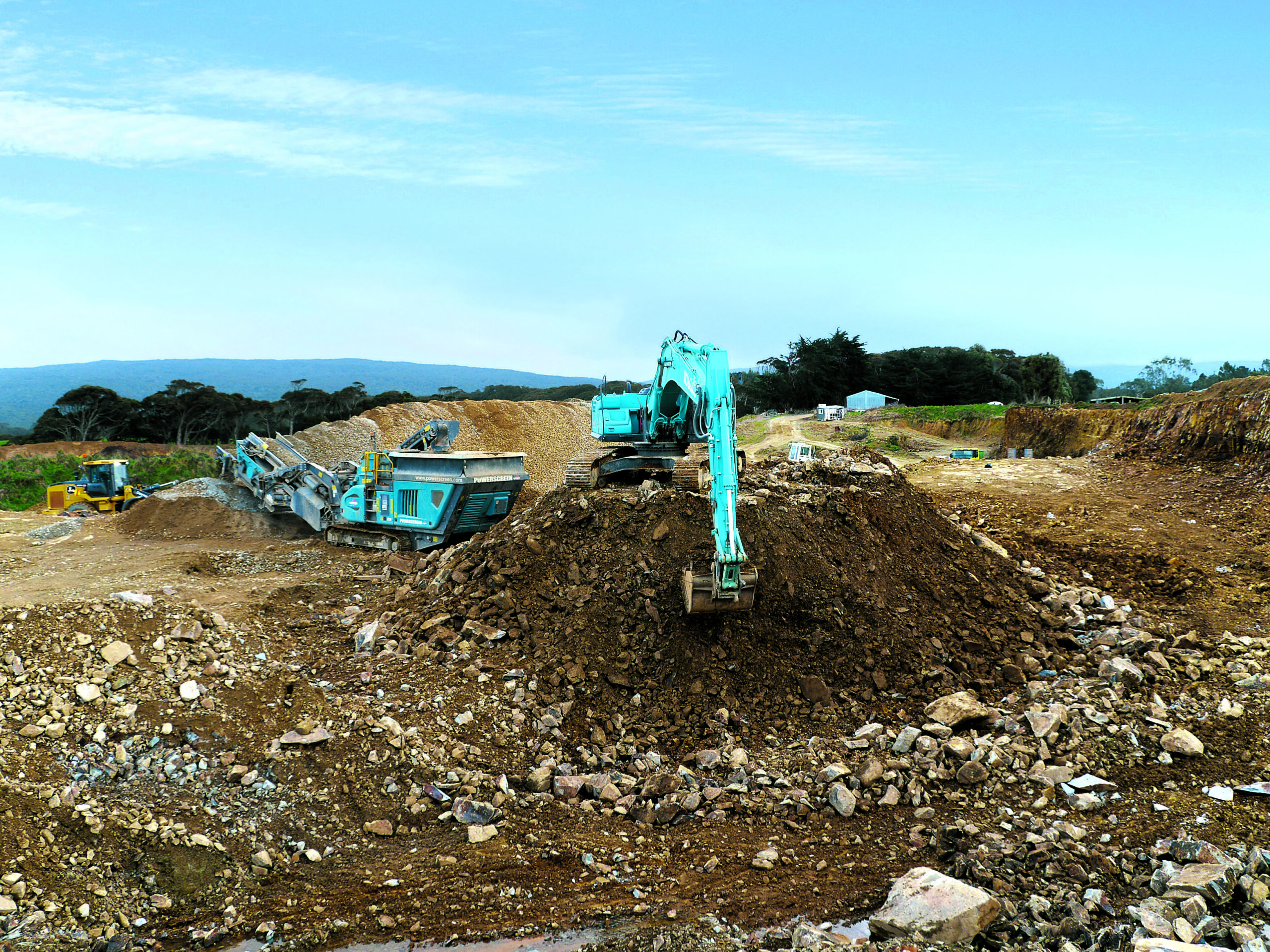
Looking to be more than suitable for the work being carried out, the Kobelco is being piloted by Ryan Currie, while George Johnston stacks the growing pile of crushed aggregate with a wheel loader. A week into the job and team of two have a good handle of what’s needed to reach their 7000-tonne target.
“This product is quite slow going as it has a high clay content,” says George. “It’s dusty when dry and gets sticky when wet.”
The Kobelco blue colour is showing the results of the dusty environment, although a dump of rain earlier has cleared away some of the grit.
Loading the impact crusher is a rinse and repeat job but one that can easily turn pear-shaped with non-attentive staff and unreliable gear.
The actual work being carried out is relatively straightforward, with the Kobelco being used to gather loose raw material from the quarry floor and stack it at the base of a loading platform. Then sitting atop the platform, it’s a matter of loading the impact crusher. The maximum digging depth of the SK260LC-10 with a standard arm is 7000mm, and an optional long arm would drop the depth to 7680mm. That’s good because the total reach of the excavator arm is being put to good use.
Listening to the machine lift full buckets of rock up to the impact crusher delivers no discernable change in engine pitch and to be honest, with a 8050kg lift capacity at maximum digging reach and the 137kW engine doing its thing, there’s no reason to expect anything less from the SK260LC-10.
“I’ve operated quite a few different diggers, and it’s got heaps of power – it’s unreal – and very smooth,” says Ryan. “I like how you can put it where you want, pull on the levers and just do it.”
Company director Jeff Robinson commented that one of the reasons for selecting the Kobelco was that the brand was well renowned and a competitive option, so good feedback from operators would be key for future equipment purchasing decisions.
“The size of the Kobelco was more manageable for the sites we work on,” says Jeff. “If we had a larger excavator, the crusher wouldn’t keep up with it.”
Moving through to the inside of the ROPS cab, a Grammer air suspension seat and adjustable control levers help ensure all body types can find a comfortable operating position, which helps reduce fatigue and the effects of repetitive lower arm movements.
A rear facing camera helps eliminate blind spots on the SK260LC-10. In the current work situation that is not really an issue, although once the excavator returns to MI Aggregates own busy quarries, the extra vision will be a much-appreciated safety feature.
Numerous other in-cab comfort functions can be found, such as a quality monitor, delivering the camera output and machine operating functions, USB charging ports, 12v outlet, and something as simple as a smartphone holder.
“The handsfree Bluetooth is really good – you can talk to people while operating with two hands. You don’t have to grab your phone,” says Ryan.
Clever thought has been put into access to areas such as the engine compartment and fuel filling areas. Three easy to manage steps allow for safe access to the upper body for engine checks, and the easy-to-lift lightweight bonnet makes life so much easier for the operator to access the engine bay. It’s reminiscent of the days when manufacturers recognised that trees or heavy objects rarely fall on the rear of a machine.
“The bonnet is light, and it’s easy to get up there with the steps,” says Ryan.
Another clever yet simple design feature not many think about is the placement of the fuel filler behind the cab.
“You fill up behind the cab, so it’s just a matter of slewing around slightly and standing on the track – it’s nice and easy to access,” says Ryan.
This removes the need to walk around the excavator to the other side and prevents any small spillages from compromising the steps to the upper body.
Staying on the subject of fuel, Ryan tells us that the SK260LC-10 is burning 15.5 litres of diesel per hour. Around 23 to 30 litres would be the expected usage for machines of the same size when carrying out heavy work.
The Kobelco is working reasonably hard when reaching down to full arms-length to collect material but is getting a slight reprieve when feeding the crusher. On that basis, we could probably say overall it is carrying out average to medium work – or perhaps medium to heavy, where one would expect a fuel burn around 17 to 22 litres per hour.
If that is the case, then the 15.5 litres per hour the SK260LC-10 is using is exceptionally good fuel economy.
Once the crushing target is reached, the Kobelco and other plant will head back to one of MI Aggregates’ two quarries.
“Our main quarry is at Mataura Island, which is 15 minutes out of Wyndham that produces mainly blue rock, but we’ve got brown rock there as well,” says George. “It produces a range of products from AP20 to AP75 along with clean ballast and roading chip. Our other quarry crushes mainly for dairy farms and produces a softer blue rock.”
As for the Kobelco SK260LC-10, Ryan sums it up pretty well:
“I’d be happy if the boss bought another one. They’re good buying, do the job, they’re simple and easy for us to use. That’s what we want.”